Quick Summary — Buying a Foreclosed Home 2026
- There are three main types of foreclosed homes: pre-foreclosures, bank-owned (REO) properties, and auction sales — each works differently
- Foreclosed homes are almost always sold as-is — the bank will not make repairs or negotiate on condition
- A pre-purchase inspection is critical even though the seller will not act on the results
- Most buyers use a standard mortgage for bank-owned homes, but an FHA 203(k) renovation loan can help finance repairs on a fixer-upper
- Oakland County’s Land Bank Authority also acquires tax-foreclosed properties — a separate path worth understanding
If you are searching for the best realtor in Farmington Hills Michigan or the best real estate agent in Oakland County Michigan to help you navigate a foreclosure purchase, you need someone who has actually closed these deals — not just read about them. I have helped buyers across Oakland County Michigan for 24 years, including foreclosure and bank-owned purchases that required extra care, patience, and the right financing strategy. Whether you are hunting for a deal on luxury homes for sale in Farmington Hills Michigan, exploring waterfront homes for sale in Oakland County Michigan that hit the market through foreclosure, or simply want an honest read on whether a specific bank-owned property is worth pursuing — Tom Gilliam RE/MAX Classic can help. Call or text 248-790-5594 anytime.
Buying a foreclosed home can be a smart way to get into a property below market value — but it is a different process than a typical purchase. The seller is usually a bank, not a person, which changes how offers, repairs, and timelines work. This guide walks through exactly how foreclosure buying works in Oakland County Michigan in 2026, where to find these listings, how to finance one, and the risks every buyer should understand before making an offer.
What Is a Foreclosed Home and How Does the Process Work?
A foreclosed home is a property the previous owner lost because they stopped making mortgage or property tax payments. The lender or local government then takes ownership and sells the home to recover what is owed. In Oakland County Michigan, foreclosed homes generally fall into three categories, and each one has a different buying process.
| Type | What It Means | How You Buy It |
|---|---|---|
| Pre-Foreclosure | Owner is behind on payments but still owns the home | Direct negotiation or short sale with owner and lender approval |
| Bank-Owned (REO) | Bank took the home back and now owns it directly | Listed for sale like a normal home, usually through an agent |
| Auction / Sheriff Sale | Property sold at a public auction to settle the debt | Cash bid at auction — highest risk, fewest protections |
Where Can You Find Foreclosed Homes for Sale in Oakland County?
Bank-owned homes are typically listed on the local MLS just like any other property, which means they show up on Zillow, Realtor.com, and Homes.com alongside regular listings — often with “REO” or “bank owned” in the description. Specialty sites focused entirely on foreclosures can also be useful for finding pre-foreclosure and auction properties that have not hit the open market yet.
Oakland County also runs its own Land Bank Authority, which acquires properties through the tax foreclosure process and sells or transfers them to support neighborhood revitalization. This is a separate path from bank-owned homes and has its own application process and restrictions — including a requirement that any purchase plan must be initiated within six months with proof of permits or construction commencement.
🏡 Looking for a Foreclosure Deal in Oakland County?
24 Years. 700+ Closings. Top 1% Oakland County.
I can set up alerts for new bank-owned listings and walk you through the process step by step. Free consultation, no pressure.
What Are the Steps to Buy a Bank-Owned Home?
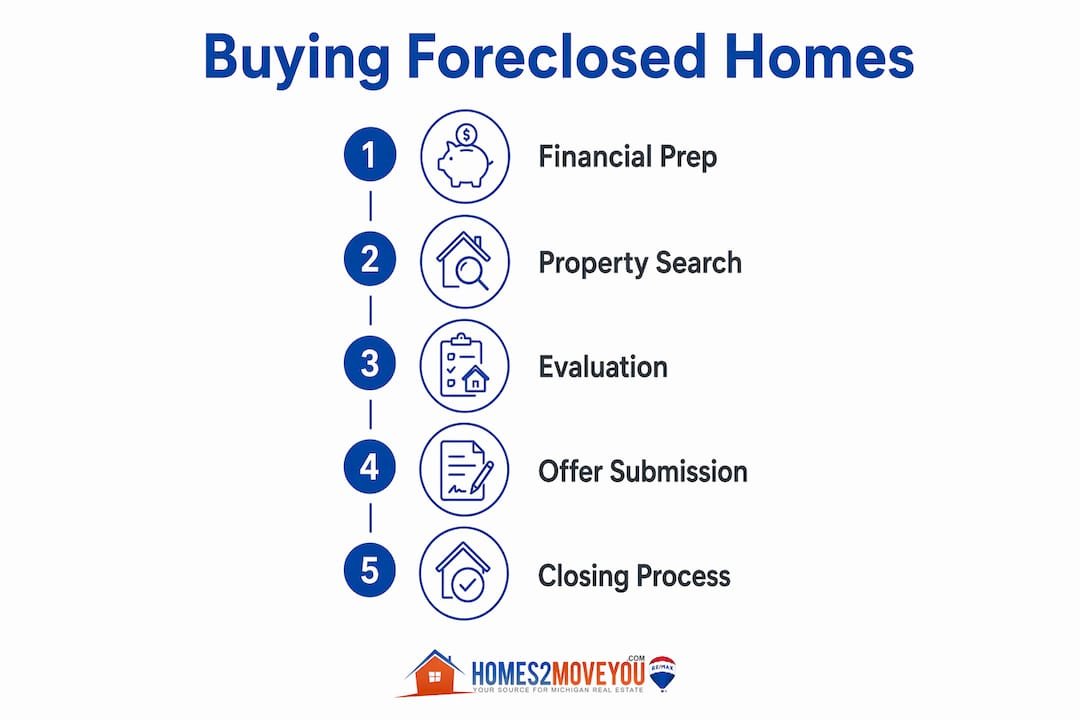
Buying a bank-owned home follows the same basic structure as a normal home purchase, with a few extra steps built in. Here is the process from start to finish.
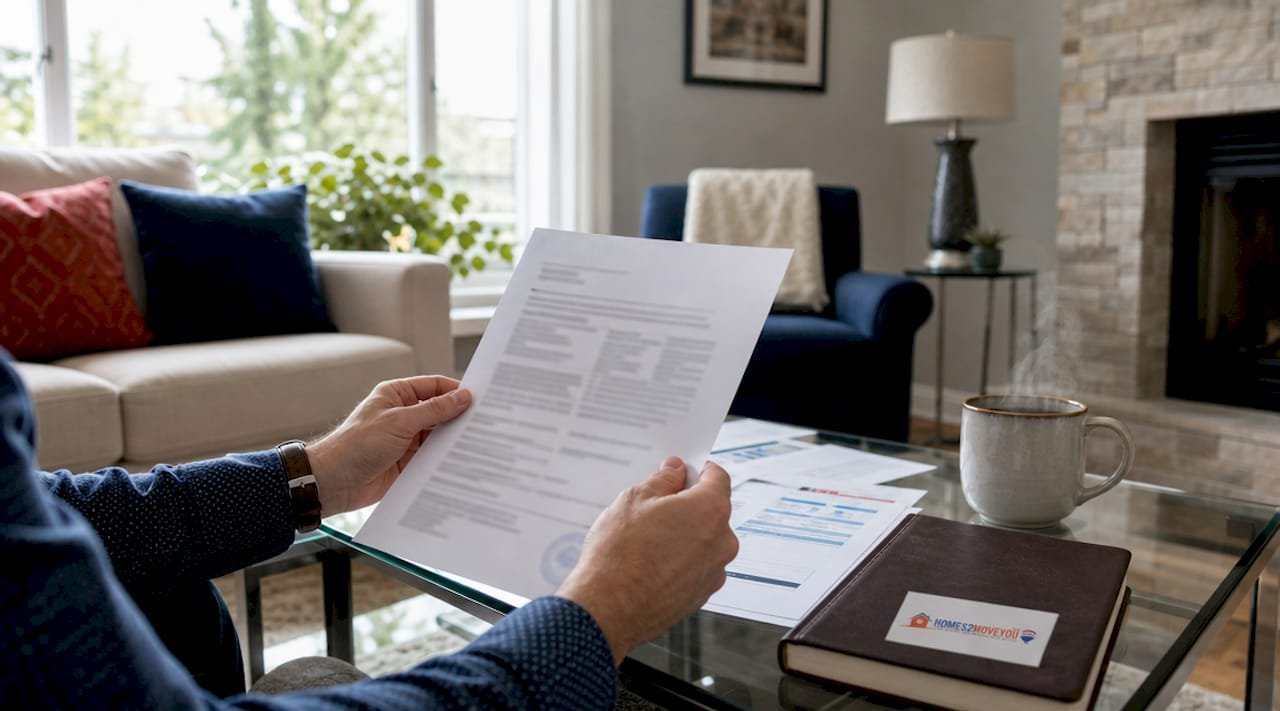
Reviewing mortgage pre-approval documents — Tom Gilliam RE/MAX Classic, Homes2MoveYou
| Step | What Happens |
|---|---|
| Step 1 | Get pre-approved. Banks selling foreclosures want proof you can close — a pre-approval letter is essential before you even view a property. |
| Step 2 | Find the listing and view it. Bank-owned homes can usually be toured like any other listing, though utilities may be off. |
| Step 3 | Submit your offer. Banks often use their own addendum forms in addition to the standard purchase agreement. |
| Step 4 | Schedule your inspection. Critical — the bank will not fix anything, but you need to know what you are buying. |
| Step 5 | Finalize financing. Confirm your loan type works for the property’s condition — some loans require a minimum condition standard. |
| Step 6 | Close. Bank-owned closings can take longer than typical sales due to internal bank approval processes — build in extra time. |
How Do You Finance a Foreclosed or Bank-Owned Home?
Reviewing mortgage pre-approval documents — Tom Gilliam RE/MAX Classic, Homes2MoveYou
Most bank-owned homes can be purchased with a standard conventional mortgage, just like any other home — as long as the property meets the lender’s minimum condition requirements. FHA and VA loans are also possible, but these loan types have stricter property condition standards, which can be a problem if the home needs significant repairs.
If the home needs work, an FHA 203(k) renovation loan lets you finance the purchase price and the cost of repairs in a single loan. This can be a powerful tool for buyers interested in a fixer-upper foreclosure, since it removes the need to come up with separate renovation cash after closing. Auction purchases are different — these almost always require cash or certified funds at the time of sale, with no financing contingency.
What Are the Risks of Buying a Foreclosed Home?
The biggest risk with any foreclosure purchase is the as-is condition. Banks selling foreclosed homes will not make repairs, negotiate credits for issues found during inspection in most cases, or provide the kind of seller disclosures you would get from a typical homeowner. The home may have been vacant for months, which can lead to issues like frozen pipes, mold, or pest problems that are not obvious from photos.
⚠️ Never Skip the Inspection — Even on an As-Is Home
Even though the bank will not act on inspection results, the inspection itself is what protects you. It tells you what you are actually buying — and gives you the option to walk away during your contingency period if the issues are too costly. Skipping this step to save money is one of the most common and costly mistakes foreclosure buyers make.
Auction purchases carry the highest risk of all. You typically cannot enter the property before bidding, there may be existing liens or occupants, and the sale is final with no recourse if problems surface afterward. For most buyers — especially first-timers — a bank-owned listing purchased through the standard process with an inspection and financing contingency is a far safer way to find a deal.
Tom’s Honest Take
Is Buying a Foreclosure Actually a Good Deal?
Sometimes — but the “deal” only exists if you go in with eyes open. I have seen buyers get genuinely great value on bank-owned homes because they budgeted realistically for repairs from day one and treated the discount as a renovation fund, not free money. I have also seen buyers walk into a foreclosure assuming it would be like any other purchase, only to be blindsided by a six-figure repair list they had no plan for.
The math that matters is simple: purchase price plus realistic repair costs plus your time and carrying costs during repairs — compared to what similar move-in-ready homes are selling for in that neighborhood. If that total still comes out ahead, it is a real deal. If it does not, the “discount” was an illusion.
If you are looking at a foreclosure listing anywhere in Oakland County and want a second opinion on whether the numbers actually work — call me before you write the offer. 📲 248-790-5594

homes2moveyou
Tom Gilliam and Homes2MoveYou share helpful real estate guidance for Oakland County buyers and sellers.